
Carmelita Apartments
Our Project
The Carmelita Apartments were built in 1907, one year after the devastating earthquake that rocked San Francisco in 1906. We purchased the building in 1987, utilizing a mix of private and public funds, primarily from the Department of Housing and Urban Development’s Community Development Block Program (CDBG) program, administered by the City of San Francisco. At the time of purchase, it was important to us that we keep the historical integrity during our rehabilitation of the building. Not only did we preserve the Roman Renaissance Revival architecture of the building, we also maintained historical significance whilst updating the utilities, (electrical, plumbing, etc.) into the current building code. Additionally, we were tasked with constructing key features to the building that did not previously exist, such as disabled units that adhered to Americans with Disabilities Act compliance codes. This meant construction of fire sprinklers throughout the building and inside units were installed, as well as additional fire escapes to meet the current emergency egress regulations.
At the time of its completion in 1990, the Carmelita apartments was the largest project in the city of San Francisco to both preserve the historic architecture of the building and to seismically reinforce the family-sized residential units.
Originally built in 1907, the building was redesigned from its original 42 units into a 40-unit residential complex, reconfigured to accommodate 6 studios, 12 one-bedroom, 16 two-bedroom, and 6 three-bedroom. Additionally, 8 ground floor commercial places were included.


A Post-Earthquake Landmark in the Mission District
Built in 1907, Carmelita Apartments rose from the ashes of the 1906 earthquake as part of the Mission District’s major reconstruction era. Located within the northern Mission—an area almost entirely rebuilt after the disaster—the building reflects the district’s shift toward denser, multi-family housing during this transformative period.
A Landmark Affordable Housing Rehabilitation
Completed in 1990, our rehabilitation of Carmelita Apartments became the largest affordable multifamily renovation in San Francisco at the time. Supported by both private investment and public funding through HUD’s Community Development Block Grant program, the project set a new precedent for historic preservation paired with affordable housing development.
Preserving Roman Renaissance Revival Architecture
When we acquired the building in 1987, our first priority was honoring its historic identity. Carmelita’s Roman Renaissance Revival style is a representative of early 20th-century reconstruction architecture. This style was carefully preserved throughout the rehabilitation. Every exterior detail was maintained to ensure the building remained a defining architectural presence in the neighborhood.
Reconfiguration for Housing Market Demands
The original 42 units were redesigned into a balanced 40-unit residential community, including 6 studios, 12 one-bedrooms, 16 two-bedrooms, and 6 three-bedrooms. This reconfiguration allowed us to modernize the layout and improve livability while maintaining the building’s historic fabric. A mix of market-rate and affordable homes ensures long-term economic diversity within the Mission.
Modernizing for Safety, Longevity, and Accessibility
While preserving its historical character, we fully modernized the building’s internal systems. Electrical, plumbing, and mechanical systems were upgraded to contemporary codes, while entirely new features—such as ADA-compliant units, fire sprinklers, and additional fire escapes—were introduced to meet modern standards of safety and accessibility.
A Vibrant Hub in the Heart of the Mission
Situated on 15th Street near the Valencia commercial corridor, Carmelita Apartments sits at the center of one of the Mission District’s most active cultural and retail areas. The building itself contributes to this vibrancy, housing eight ground-floor commercial spaces that today include clothing boutiques, a corner store, and an artisanal coffee shop—continuing the Mission’s long legacy of residential-over-retail corridors.
Facts & Logistics
San Francisco, California
LOCATION
Carmelita Apartments are located in the vibrant, culturally significant neighborhood of the Mission District in San Francisco. Settled on the corner of 15th Street and Valencia, the apartments are walking distance from16th Street Bart Center, and have access to many commercial shops and restaurants.
1907/ 1990
BUILT/ COMPLETED
Utilizing Community Development Block Grant Funds (CDBG), Carmelita Apartments was able to come into completion in 1990.
Residential/ Commercial
CATEGORY
Carmelita Apartments included a seismic rehabilitation of a historic unreinforced masonry building to 40 family units serving low to moderate income tenants.
Significance
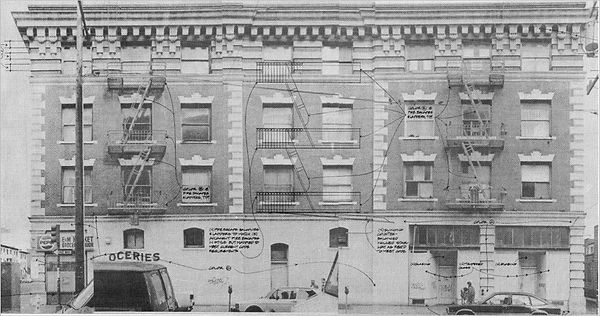
The Carmelita apartments is the largest project in the city of San Francisco to both preserve the historic architecture of the building and to seismically reinforce the family-sized residential units. HDNPC purchased the Carmelita Apartments in 1987. Soon after, we began plans to rehabilitate the dilapidated four-story building into attractive and livable housing for large families. Now recently completed, the Carmelita apartments is the largest family-sized residential rehabilitation project in San Francisco, with a total development cost of exceeding $4 million.
The Carmelita apartments is an important project for a number of reasons. The preservation of these units counteracts the depletion of family-sized housing in the City of San Francisco. Ownership by HDNPC guarantees long-term affordability for low income people. During rehabilitation, jobs in construction were created, and the eight commercial spaces contributed to the economic vitality of the area. Indeed, the development of the Carmelita Apartments has had a positive impact on a corridor of the city which was once plagued by physical deterioration and crime.
This rehabilitation project is important on yet another level: it is the first major seismic reinforcement effort for affordable housing in San Francisco. The project has demonstrated how seismic retrofitting can be accomplished in an unreinforced masonry building without mass displacement of tenants. The Carmelita is a model for public and nonprofit partnerships in seismic safety for low income housing.
Finally, it is important to note that the Carmelita apartments was one of the first buildings to be constructed after the 1906 earthquake, symbolizing the Mission’s rebirth after this historic natural disaster. HDNPC made certain that the renovation work was completed according to stringent historic preservation codes, gaining designation of the apartments as a historically significant building by the National Register of Historic Buildings.
Post-disaster reconstruction transformed the northern Mission’s formerly varied residential landscape—once dominated by detached homes—into districts of stacked flats, especially “Romeo flats,” and mixed-use buildings such as boarding houses, residential hotels, and corner properties with commercial space below and housing above. Storefront design evolved to feature deeper vestibules, expanded display windows, and decorative tiling. Larger commercial buildings embraced architectural styles associated with civic and institutional structures, including Classical Revival, Italian Renaissance Revival, and Chicago Commercial. The Roman Renaissance Revival-style Carmelita Apartments exemplifies this new wave of construction.
Have a question about this property? Send an inquiry:
268 Bush Street P.O. Box 3966
San Francisco CA 94104
(925) 438-0016
